
Ever been three days into a backcountry trip with a dead phone battery? Your GPS stops working, emergency calls become impossible, and those perfect summit photos remain uncaptured. A quality solar phone charger for backpacking solves this problem by turning sunlight into reliable power for your essential devices.
Dead batteries shouldn’t dictate your adventure timeline, especially when a best portable solar charger power bank can keep your essential devices running in the backcountry. Today’s solar chargers are built to be lighter, stronger, and more efficient than previous models. According to research from the National Park Service, over 297 million people visited national parks in 2023, with many venturing into backcountry areas where traditional charging options don’t exist.
We spent months testing solar chargers on actual trails, from sunny desert hikes to cloudy mountain adventures. We compared charging speeds in real conditions, measured pack weight impact, and evaluated how well they survive typical trail abuse. Every recommendation comes from hands-on experience with gear that proved reliable when it mattered most.
This guide covers the best solar phone chargers for backpacking, focusing on models that balance power output with portability. Whether you’re planning day hikes or multi-week expeditions, you’ll find options that keep your devices charged without weighing down your pack.
Comparison Table of The Best Solar Phone Chargers for Backpacking 2026
| Product | Power Output | Weight | Material / Build | Weather Rating | Ports | Best For |
| BigBlue SolarPowa 28W | 28W | 1.3 lbs (590g) | Monocrystalline panels + nylon fabric | IPX4 | 2× USB-A | Best overall performance; fast phone charging |
| Anker SOLIX PS30 30W | 30W | 2.4 lbs (1088g) | Monocrystalline + reinforced fabric | IP65 | USB-A + USB-C | Best reliability & durability |
| Blavor 10W Solar Charger | 10W | 1.2 lbs (544g) | Monocrystalline + plastic frame | Not rated | 1× USB-A | Lightweight + budget choice |
| Goal Zero Nomad 10 | 10W | 1.1 lbs (498g) | Monocrystalline + rugged nylon | Weather-resistant | 1× USB-A | Most lightweight panel |
| FlexSolar 40W Panel | 40W | 2.2 lbs (998g) | ETFE-coated monocrystalline panels | Waterproof | USB-A + USB-C | High power / fast charging |
| Nekteck 28W Solar Charger | 28W | 1.3 lbs (600g) | Monocrystalline + PET polymer | Weather-resistant | 2× USB-A | Best performance for price |
| LUMOPAL 60W Solar Panel | 60W | 3.2 lbs (1450g) | Monocrystalline + waterproof fabric | Waterproof | USB-C PD 60W + USB-A QC3.0 | Charging laptops / tablets |
| EcoFlow River 2 Max + Solar Panel | 160W (panel input) | 13.6 lbs (6.1 kg) | ABS + metal + fabric panel | Weather-resistant | AC, DC, USB-A, USB-C, XT60 | Basecamp, car camping, heavy power needs |
| Powkey 15W Solar Panel | 15W | 1.1 lbs (500g) | ETFE-coated monocrystalline | Waterproof | USB-A + USB-C + DC | Balanced portability + features |
Top 3 Quick Picks for Best Solar Phone Chargers for Backpacking
Editor’s Pick: BigBlue SolarPowa 28W
Best Value: Blavor 10W Solar Charger
Most Lightweight: Goal Zero Nomad 10
10 Best Solar Phone Chargers for Backpacking 2026
1. BigBlue SolarPowa 28W

BigBlue SolarPowa 28W
Buy on AmazonIf you’re looking for the perfect balance of power, portability, and performance, the BigBlue SolarPowa 28W stands out as the best solar phone charger for backpacking and a top choice among the Best solar phone chargers for backpacking overall. This panel performed well across the board and still impressed us with its portability, and is the fastest charging of the smaller panels.
The three-panel foldable design packs down surprisingly compactly while delivering an impressive 28W output. Real-world testing shows it can charge an iPhone from 0-50% in about 45 minutes under optimal sun conditions. The dual USB ports with smart charging technology automatically detect your device and deliver the fastest possible charge.
Its durable build and weatherproof design make it a backpacker favorite, while reinforced corners and IPX4 certification help it withstand trail wear and drizzle. Multiple attachment points make it easy to clip to your pack while hiking.
Pros:
- Excellent power-to-weight ratio at 1.3 lbs
- Fast charging speeds in direct sunlight
- Compact folding design saves pack space
- Dual USB ports charge two devices simultaneously
- Durable construction handles trail conditions
Cons:
- Performance drops significantly in cloudy conditions
- Higher price point than basic models
- No built-in battery storage
2. Anker SOLIX PS30 30W
The Anker SOLIX PS30 carries the brand’s trusted reliability into solar charging. With its fair price, positive reviews, and strong reputation, it stands out as our top choice for solar phone chargers.
This foldable solar panel delivers 30W of power through its high-efficiency monocrystalline cells, reinforcing why many backpackers consider it among the best portable solar phone charger options for trail use. The PowerIQ technology ensures your devices get the optimal charging current, while the IP65 weather rating provides superior protection against dust and water.
What sets it apart is the inclusion of multiple output options and robust build quality. The reinforced fabric and scratch-resistant surface hold up well to repeated folding and outdoor use. It’s slightly heavier than competitors but makes up for it with consistent performance.
Pros:
- Top-tier 30W power output
- Excellent IP65 weather protection
- Anker’s proven reliability and warranty
- Multiple charging ports and options
- Durable construction
Cons:
- Heavier at 2.4 lbs
- Larger folded size takes more pack space
- Premium pricing
3. Blavor 10W Solar Charger
For ultralight backpackers who prioritize weight savings, the Blavor 10W offers an impressive balance of performance and portability, making it a strong contender among the best solar phone chargers for Backpacking in the lightweight category. The Blavor 10W is a compact, lightweight, and affordable option that delivers solid performance for its power level.
Despite its compact size, this solar charger punches above its weight class and works well as a portable solar charger for phone use on longer backpacking trips. The 10W output is sufficient for keeping smartphones and small electronics topped off during multi-day trips. With its integrated stand and carabiner attachments, positioning it for maximum sun is simple.
Budget-conscious hikers appreciate its affordable price point without sacrificing essential features. While it won’t charge as quickly as higher-wattage models, it’s perfect for maintaining device power rather than rapid charging.
Pros:
- Lightweight at just 1.2 lbs
- Very affordable price point
- Compact folded size
- Built-in kickstand for positioning
- Good value for casual backpackers
Cons:
- Lower 10W output means slower charging
- Single USB port limits simultaneous charging
- Less durable than premium models
Suggested Reads- 10 Best Backpacking Water Filters of 2026
4. Goal Zero Nomad 10

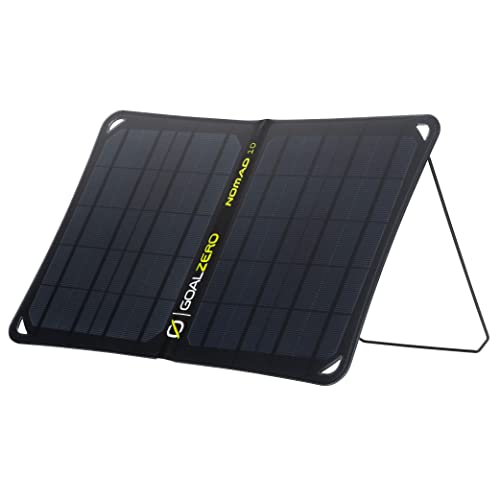
The Goal Zero Nomad 10 is a foldable and portable solar panel that is designed for backpacking, hiking, and travel. It features a monocrystalline solar panel that can generate up to 10 watts of power.
This trusted name in portable power delivers reliable performance in a backpack-friendly package. The Nomad 10’s monocrystalline panels provide steady output, while the rugged construction handles trail conditions without complaint.
Goal Zero’s ecosystem approach means this charger pairs perfectly with their power banks and other accessories. The weather-resistant design and reinforced corners show this was built specifically for outdoor adventures.
Pros:
- Proven reliability from a trusted brand
- Weather-resistant construction
- Integrates with the Goal Zero power bank ecosystem
- Lightweight at 1.1 lbs
- Good build quality
Cons:
- 10W output limits the charging speed
- Higher price for the power output
- Single USB port only
5. FlexSolar 40W Foldable Solar Panel

FlexSolar 40W Foldable Solar Panel
Buy on AmazonThe FlexSolar 40W brings serious power to the backpacking world with its high-efficiency design and versatile charging options. This foldable panel delivers 40W through both USB-C and USB-A outputs, making it compatible with modern devices and power banks.
The waterproof construction and durable materials handle harsh outdoor conditions without compromise. The high power output means faster charging times, especially valuable when sun exposure is limited. Multiple output options ensure compatibility with all your devices.
What sets it apart is the combination of high power output with reasonable portability, which is why many long-distance hikers include it in their list of the best solar phone chargers for Backpacking. While heavier than ultralight options, the charging speed makes up for the extra weight on longer trips where reliable power is essential.
Pros:
- High 40W power output for fast charging
- USB-C and USB-A outputs for device compatibility
- Waterproof construction for harsh conditions
- Efficient charging even in partial shade
- Good for charging power banks quickly
Cons:
- Heavier at 2.2 lbs
- Larger folded size takes more pack space
- Higher price point
6. Nekteck 28W Solar Charger
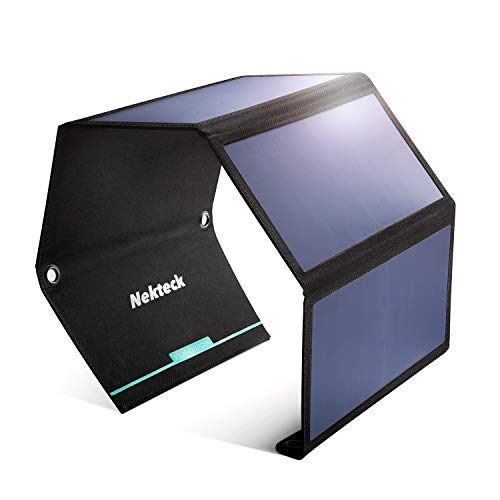
Nekteck 28W Portable Solar Panel Charger
Buy on AmazonThe Nekteck 28W offers premium performance at a more accessible price point. The Nekteck produced 834 mAh in testing, showing solid real-world performance that translates to reliable device charging on the trail.
This three-panel foldable design maximizes surface area while maintaining portability. The high-efficiency solar cells and smart charging technology ensure your devices get the power they need quickly. Reinforced grommets and sturdy fabric construction handle repeated use.
Budget-conscious backpackers appreciate getting near-premium performance without the premium price tag. While it may not have all the bells and whistles of more expensive models, it delivers where it counts.
Pros:
- High 28W power output
- Competitive pricing for the performance
- Durable three-panel foldable design
- Smart charging technology
- Good power-to-weight ratio
Cons:
- Build quality is not quite premium level
- Limited warranty compared to top brands
- Weather resistance could be better
7. LUMOPAL 60W Foldable Solar Panel
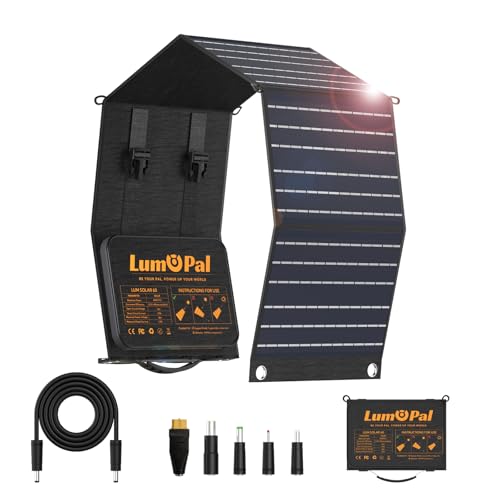
LUMOPAL 60W Foldable Solar Panel
Buy on AmazonThe LUMOPAL 60W delivers serious charging power with PD60W USB-C and QC3.0 USB-A outputs, making it perfect for charging laptops, tablets, and multiple devices simultaneously. This high-efficiency panel features advanced charging protocols that optimize power delivery for each connected device.
The waterproof design and rugged construction handle harsh outdoor conditions without compromise. Despite the 60W output, it folds down to a manageable size for car camping and base camp operations where maximum power generation is essential.
What makes this charger exceptional is the combination of laptop-grade charging capability with outdoor durability. The PD60W USB-C port can charge most laptops, while the QC3.0 USB-A handles phones and tablets efficiently.
Pros:
- Massive 60W power output
- PD60W USB-C for laptop charging
- QC3.0 USB-A for fast device charging
- Waterproof construction
- Advanced charging protocols
Cons:
- Heavy at 3.2 lbs
- Large folded size
- Expensive investment
- Too powerful for basic phone charging needs
8. EcoFlow River 2 Max Solar Generator

EcoFlow River 2 Max Solar Generator
Buy on AmazonCombined weight with the EcoFlow RIVER 2 Max is close to 30lbs. It is still a portable solar charger, but it may be a bit heavy for some backpackers on long hikes. Best for Dry Camping: EcoFlow RIVER 2 Max Solar Generator.
For base camp operations or glamping adventures, the EcoFlow River 2 Max provides serious power capacity. The 512Wh battery and 160W solar input can handle multiple devices and even small appliances.
While too heavy for traditional backpacking, it excels in car camping scenarios where you need reliable power for extended periods. The fast charging and multiple output options make it incredibly versatile.
Pros:
- Massive 512Wh battery capacity
- 160W solar charging capability
- Multiple AC and DC outputs
- Fast charging technology
- App connectivity and monitoring
Cons:
- Very heavy at 13.6 lbs
- Expensive investment
- Overkill for basic phone charging
- Not suitable for ultralight backpacking
9. Powkey 15W Solar Panel

Powkey 15W Solar Panel
Buy on AmazonThe Powkey 15W strikes a perfect balance between power and portability for most backpacking needs. This foldable panel features USB-A, USB-C, and DC outputs with ETFE coating for enhanced durability and weather resistance.
At just 1.1 lbs, it’s light enough for serious backpackers while providing sufficient power for smartphones, GPS devices, and small electronics. The ETFE material provides better light transmission and longer lifespan compared to standard PET panels.
The multiple output options and compact design make it versatile for different devices and charging scenarios. It’s an excellent middle-ground option for backpackers who want more power than basic models without the weight penalty of high-wattage panels.
Pros:
- Lightweight at 1.1 lbs
- Multiple output options (USB-A, USB-C, DC)
- ETFE coating for durability
- Waterproof construction
- Good balance of power and weight
Cons:
- 15W output limits charging speed for larger devices
- More expensive than basic 10W models
- DC output may be unnecessary for phone-only charging
Tips for Picking the Right Solar Phone Charger for Backpacking
Here’s what you need to consider before making your pick:
Power Output and Charging Speed
Solar charger wattage directly impacts how quickly your devices charge. A 28W solar charger can charge most smartphones in 1-2 hours under ideal conditions, while a 10W model might take 3-4 hours. For backpacking, 15-30W provides the sweet spot between charging speed and portability.
Weight and Portability
Every ounce counts on the trail. Ultralight backpackers should target solar chargers under 1 lb, while car campers can handle heavier models with more features. Foldable designs pack smaller and distribute weight better than rigid panels.
Weather Resistance and Durability
Look for IPX4 rating minimum for water resistance, though IPX5 or IP65 is better for harsh conditions. Reinforced corners, quality zippers, and scratch-resistant surfaces ensure your investment survives trail abuse.
Device Compatibility and Ports
Most modern solar chargers feature USB-A ports with smart charging technology. Some include USB-C or wireless charging. Consider how many devices you need to charge simultaneously and what connection types they require.
Battery Storage vs Direct Charging
Solar panels with built-in batteries store power for later use but add weight and complexity. Direct charging panels are lighter but require immediate use of generated power. Choose based on your camping style and power needs.
Sun Conditions and Efficiency
Monocrystalline panels perform better in low light and partial shade than polycrystalline alternatives. Consider your typical hiking destinations and weather patterns when choosing panel efficiency levels.
Conclusion
The right solar phone charger for backpacking transforms your relationship with technology in the wilderness. Instead of rationing battery life and stressing about dead devices, you can confidently navigate, communicate, and capture memories knowing the sun will keep you powered up.
In our experience, the Big Blue (or other similar solar panels) will integrate best into your outdoor lifestyle with the help of an external battery, but direct solar charging works well for backpackers who regard simplicity and weight savings.
Whether you choose the high-performance BigBlue SolarPowa 28W for fast charging, the budget-friendly Blavor 10W for basic needs, or the ultralight Suntactics sCharger-5 for minimalist adventures, each option in this guide delivers proven trail performance. Pick the one that matches your power needs, pack weight limits, and adventure style – then get out there and explore with confidence.
Frequently Asked Questions
Are solar phone chargers worth it for backpacking?
Yes, solar phone chargers are worth it for backpacking, especially on multi-day trips where traditional power banks won’t last. They provide renewable power for GPS navigation, emergency communication, and photography without adding the weight of multiple backup batteries.
How many hours does it take to fully charge a phone with solar power?
Charging time depends on the solar charger’s wattage and the sun’s conditions. A 28W solar charger can charge most smartphones from 0-100% in 2-3 hours under direct sunlight, while a 10W model takes 4-6 hours. Cloudy conditions can double or triple these times.
Do solar chargers work in cloudy weather?
Solar chargers work in cloudy weather but at significantly reduced efficiency, typically 10-25% of their rated output. For consistent power in variable weather, consider a solar charger with built-in battery storage or pair your solar panel with a separate power bank.
What size solar charger do I need for backpacking?
A solar charger in the 10–28W range offers an ideal mix of charging power and portability for smartphones. Ultralight backpackers can manage with 5-10W models, while those charging multiple devices or tablets should consider 20-30W options. Anything over 30W becomes too heavy for most backpacking applications.
Can solar chargers damage my phone?
Quality solar chargers with smart charging technology won’t damage your phone. They include voltage regulation and overcurrent protection. However, cheap, unregulated solar chargers can potentially harm devices, so stick with reputable brands that include proper charging circuitry and safety features.