Ever walked through a campsite and seen a big canvas bell tent glowing softly inside and thought, “That looks way nicer than my little nylon tent”? That’s usually how bell tents get your attention. They don’t scream for it; they just quietly look comfortable.
Bell tents offer something different from regular camping shelters. They’re tall, roomy, and feel more like a small cabin than a place you crawl into at night. You can stand up inside, bring real bedding, add a rug, and actually enjoy being inside when it rains instead of just waiting for it to stop. For family trips, long stays, or anyone who likes camping without feeling cramped, that makes a big difference.
And the trend toward comfort-focused outdoor stays isn’t small. The global glamping market, which includes canvas tent stays and similar up-market camping accommodations, is expected to be worth about $3.37 billion in 2025, reflecting growing interest in outdoor experiences that blend nature with comfort.
In this guide, we’re looking at the 7 Best Bell Tents for Camping in 2026, focusing on real options that perform well in everyday use, not just ones that look good in photos.
Top Bell Tent Picks for Camping in 2026
Editorial Pick – WaldZimmer Cotton Canvas Bell Tent
Best Lightweight – Glamcamp Cotton Canvas Bell Tent
Best Affordable – VANFOND Canvas Bell Tent With Stove Jack
Comparison Table of the Best Bell Tents For Camping (2026)
| Tent Model | Size / Diameter | Peak Height | Occupancy | Material | Waterproof Rating | Stove Jack | Included Floor | Weight | Best For |
| WaldZimmer Cotton Canvas Bell Tent | ~10 ft / 3 m | 6.6 ft | 2–3 | Polycotton canvas | Water-resistant (no PU) | Yes | Heavy-duty PVC | ~18 kg | Spacious 4-season base camp |
| ShinHye Canvas Bell Tent (Yurt) | ~9.85 ft / 3 m | ~7.22 ft | 2–4 | Breathable canvas + PE bottom | ~5000 mm PU | Yes | Sewn-in PE | ~28 lb | Weather-ready 4-season |
| VANFOND Canvas Bell Tent | ~10 ft / 3 m | ~6.6 ft | 2–3 | Canvas | Waterproof coating + seam sealed | Yes | Sewn-in PVC | ~43 lb | Cozy 4-season |
| Glamcamp Cotton Canvas Bell Tent | ~9.8 ft / 3 m | ~6.56 ft | 2–4 | Cotton-poly canvas | ~3000 mm | Yes (varies by batch) | Zippered PVC | ~18 kg | Small family / couples |
| MC TOMOUNT Canvas Bell Tent | ~16.4 ft / 5 m | ~9.18 ft | ~8–10 | TC canvas + Oxford | ~3000 mm (floor) | Yes | Detachable Oxford | ~55 lb | Large group / festival |
| Outdoor Safari Glamping Tent Oxford | ~13 ft / 4 m | ~8.2 ft | 4–5 | 900D Oxford + mesh | ~5000 mm | Yes (chimney hole) | 540 gsm PVC (zip-off) | Heavy | Glamping / family base |
| POMOLY Camping Hot Tent (CHALET 70 Pro) | ~8.2 ft × 6.56 ft | ~4.9 ft | 2 | 70D ripstop polyester | ~2500 mm | Yes | Fireproof integrated | Mixed | Hot tent / 4-season use |
7 Best Bell Tents For Camping in 2026 (Reviewed)
1. WaldZimmer Cotton Canvas Bell Tent with Stove Jack


The WaldZimmer bell tent is built for campers who want a real base-camp tent instead of a weekend nylon shelter. With a 10-ft diameter, 6.6-ft peak height, and thick 500gsm PVC floor, it gives you enough space to stand, move, and set up real camping furniture or a stove inside.
The polycotton canvas is the big upgrade here. It breathes better than polyester tents, so it stays cooler in summer and warmer in cold weather. That makes it much more comfortable for glamping, overlanding, and multi-day stays.
The stove jack turns this into a true four-season bell tent. You can safely run a wood stove, cook inside, and stay warm in cold or snowy weather, something most regular tents simply can’t do.
Ventilation is handled well with roof vents, mesh-lined windows, and a double-layer door, which keeps air moving without letting bugs in. The steel center pole, guy lines, and thick PVC floor also make it stable and weather-resistant for long-term camping.
This is not a backpacking tent; at 18 kg, it’s meant for car camping, glamping, festivals, and overland setups where comfort matters more than weight.
Pros
- Breathable polycotton canvas (better temperature control)
- Stove jack for cold-weather camping
- Spacious interior with standing height
- Thick waterproof PVC floor
- Strong wind stability
Cons
- Heavy, not for hiking or backpacking
- Canvas should not sit in heavy rain for long periods
- Takes more space to transport than nylon tents
2. ShinHye Canvas Bell Tent for Camping
The ShinHye canvas bell tent is made for campers who want real shelter, not just a place to sleep. This is the kind of tent you set up for bushcraft, cold-weather trips, festivals, or long base camps, where space, airflow, and weather protection matter more than saving a few pounds.
The cotton canvas walls with a 5,000mm PU waterproof rating give this tent a very different feel from nylon or polyester tents. We observed that the fabric breathes well while still blocking rain, which helps reduce condensation compared to synthetic tents. On wet or cold trips, that makes a noticeable difference in comfort.
The sewn-in PE groundsheet keeps moisture from coming up through the floor, which is important for canvas tents since they’re often pitched for multiple days in one spot. Combined with the stove jack, this tent is clearly designed for four-season use, including winter camping with a wood stove.
Inside, the 9.8-foot diameter and tall center height give enough room for 2–4 people, cots, gear, and a stove without feeling cramped. We noticed that the straight sidewalls make the space far more usable than low-sloped backpacking tents; you can stand up, change clothes, and move around without crouching.
The steel center pole and guy lines make the structure feel solid, and this tent is meant to stay planted in wind, rain, and long storms rather than being a lightweight, move-every-day setup.
This is not a minimalist tent, it’s a true canvas base-camp shelter.
Pros
- 5,000mm waterproof canvas blocks heavy rain
- Breathable cotton fabric reduces condensation
- Stove jack + sewn-in floor for winter camping
- Tall, open interior for cots and standing room
- Strong steel pole system
Cons
- Heavier than nylon or polyester tents
- Takes longer to dry than synthetic fabrics
- Needs proper staking and tensioning for best performance
3. VANFOND Canvas Bell Tent With Stove Jack

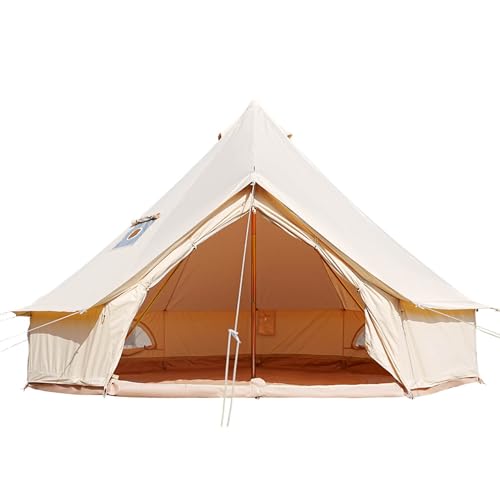
This is a simple, winter-ready bell tent that works well for small groups who want warmth without hauling a huge shelter. With a 10-foot diameter and tall center height, there’s enough room to stand up, set up a stove, and still have space for sleeping pads or a small cot setup.
The canvas fabric breathes well, which helps with condensation, and the sewn-in PVC floor keeps ground moisture out. The stove jack is properly placed and doesn’t eat up usable space, so you can run a small wood stove without the tent feeling crowded.
The roll-up walls and big windows make it flexible. On warm days, you can open it up for airflow and views. When it’s cold or windy, you can close it down and trap heat surprisingly well. Tent setup is straightforward and doesn’t feel overwhelming for a canvas tent this size. It’s best suited for 2–3 people who want a cozy hot-tent setup, not a huge glamping base camp.
Pros
- Breathable canvas keeps condensation low
- Sewn-in waterproof floor
- Proper stove jack for winter camping
- Rolls open for airflow in summer
- Easy to set up a canvas tent
Cons
- Smaller than some expect
- Heavy compared to nylon tents
- Not for large groups
4. Glamcamp Cotton Canvas Bell Tent


The Glamcamp 3-meter bell tent is a classic small glamping setup that works well for couples, small families, or solo campers who want space without hauling a massive tent. At just under 10 feet wide with a tall peak height, it’s easy to stand up inside and still leaves room for a bed, bags, and a small table.
The cotton-poly canvas is one of its best features. We noticed it stays noticeably cooler during the day and doesn’t trap moisture the way synthetic tents do. In damp or rainy conditions, the 3000mm waterproof rating keeps light and moderate rain out without turning the tent into a sauna.
The zip-in PVC groundsheet makes a big difference in wet grass or muddy campsites. Being able to unzip it and roll up the walls is useful too, on warm days, it turns the tent into a shaded canopy instead of a sealed room.
Setup is straightforward. With the center pole, A-frame door pole, and guy lines, it goes up fast and stays stable once tensioned properly. It’s not ultralight, but for car camping and glamping, the weight feels reasonable for what you get.
This tent works best for people who want a real canvas camping feel without the bulk of a giant bell tent.
Pros
- Breathable cotton-poly canvas
- Good headroom for a 3-meter tent
- Zip-off PVC floor is practical
- Stove jack included
- Quick to set up
Cons
- Fabric weight varies by batch
- Not ideal for very heavy rain
- Too heavy for backpacking
5. MC TOMOUNT Canvas Tent Bell Tent
MC TOMOUNT Canvas Tent Bell Tent
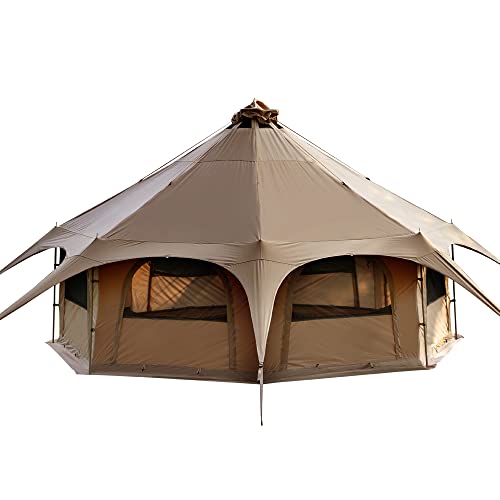
Buy on AmazonThis is a big, comfortable base-camp tent. The first thing you notice is how much space it has. With a 16.4-foot diameter and tall side walls, you can stand up, walk around, and set up beds, chairs, and even a stove without feeling cramped. It feels more like a small cabin than a tent.
The cotton-poly roof blocks heat and breathes well, so it stays cooler inside than most synthetic tents. The walls and floor feel thick and sturdy, and the layout with eight doors and roll-up sides makes it easy to turn the whole tent into an open canopy when it’s hot.
It also comes with a stove jack, which makes it useful for fall and winter camping. Just keep in mind the roof isn’t PU-coated, so it handles light to medium rain better than long wet storms. This tent is meant for car camping, glamping, festivals, and long stays, not quick overnight trips.
Pros
- Tons of standing room and usable space
- Breathable cotton roof keeps it cooler
- Side walls roll up for airflow
- Stove jack included
- Strong floor and seams
Cons
- Heavy and bulky
- Not ideal for heavy rain
- Not a travel or backpacking tent
6. Outdoor Safari Glamping Tent Oxford

Outdoor Safari Glamping Tent Oxford
Buy on AmazonThis is a big, lodge-style glamping tent built for people who want real space, real beds, and real weather protection. At 4 meters wide with a tall center pole, it feels more like a canvas cabin than a tent. You can fit two queen beds or a full family setup without it feeling cramped.
The 900D Oxford fabric with 5000mm waterproof coating does its job in heavy rain. We noticed water beads and run off instead of soaking in, which is what you want when storms hit overnight. The 540gsm PVC floor is thick and tough, keeping ground moisture out even when the soil is wet.
The mesh doors and windows with canvas covers give you control over airflow. Open them in warm weather, and the tent stays breezy. Close them, and it holds heat well at night. The roll-up side walls are especially useful for hot days or festival camping. This tent isn’t for backpacking; it’s for car camping, glamping, and long stays where comfort matters.
Pros
- Huge interior space
- 5000mm waterproof fabric and floor
- Thick PVC groundsheet
- Good ventilation with mesh + roll-up walls
- Strong steel poles
Cons
- Heavy and bulky
- Oxford fabric doesn’t breathe like canvas
- Takes more space to pack
7. POMOLY Camping Hot Tent Cabin Tent

POMOLY Camping Hot Tent Cabin Tent
Buy on AmazonThe POMOLY CHALET 70 Pro is built for campers who want a compact, storm-ready hot tent instead of a huge canvas base camp. It’s small enough to be portable but strong enough for real winter camping with a stove.
The 70D ripstop polyester fabric with a 2500mm waterproof rating makes this tent far more weather-proof than traditional canvas bell tents. We observed that this material doesn’t soak up water the way cotton canvas does, so it dries much faster and handles rain and snow far better on multi-day trips.
Inside, there’s enough room for two adults, sleeping pads or a cot, and a wood stove. The integrated fireproof floor mat stands out here; we observed that it adds a real layer of safety by protecting the groundsheet from sparks and falling embers when running a stove.
The tent uses two aluminum alloy poles with multiple guy-out points, which gives it excellent stability. We observed that this frame design keeps the tent tight and planted even in strong wind and wet conditions, which is exactly what you want for four-season camping.
The double doors and side rain curtains make it easy to get in and out without letting rain blow inside, and the built-in stove jack allows safe use of a wood stove for cold-weather camping.
This isn’t a glamping tent; it’s a serious backcountry hot tent built for cold, wet, and windy environments.
Pros
- 2500mm waterproof polyester handles rain and snow very well
- Fireproof floor mat for stove safety
- Excellent wind resistance with aluminum poles
- Stove jack included
- Quick to dry compared to canvas
Cons
- Smaller interior than bell tents
- Condensation can build up in humid or cold conditions
- Heavier than basic backpacking tents
Why Bell Tents Feel Different From Regular Camping Tents
The first thing you notice with a bell tent is the space. Instead of low walls and sloped ceilings that force you to crouch, a bell tent gives you tall side walls and a wide open center. You can stand, move around, and actually live inside it, not just sleep and crawl out. That alone changes how camping feels.
The canvas also makes a big difference. Unlike thin nylon tents that trap heat and moisture, bell tents breathe. We’ve noticed they stay cooler during the day, warmer at night, and don’t get that sticky, damp feeling when the temperature drops. Even after a rainy night, the air inside feels fresher instead of musty.
And then there’s the way they handle weather. A bell tent doesn’t flap and snap all night in the wind like lightweight tents do. It sits solid, stays quiet, and feels more like a small cabin than a piece of gear. That calm, steady feeling is what makes people fall in love with bell tents after their first trip.
How People Actually Use Bell Tents on Camping Trips
On real camping trips, a bell tent ends up being more than just a place to sleep. It becomes the main living space, where bags stay spread out, chairs get set up, and you can change clothes or make coffee without crawling around on your knees. Being able to stand and move around inside makes the whole camp feel calmer and more comfortable.
Most people also use a bell tent as their base camp. Gear stays inside while you head out hiking, fishing, or exploring, and when you come back, everything is still dry and in place. Instead of constantly packing and unpacking, the tent feels like a small cabin you return to at the end of the day.
Cold weather is where bell tents really shine. Once a small wood stove is running through the stove jack, the space warms up fast and stays warm for hours. That turns wet, windy, or snowy trips into something you can actually enjoy instead of just enduring.
What Matters When Buying a Canvas Bell Tent
Size and usable space
It’s not just how many people can sleep inside, it’s whether you can stand up, change clothes, set up a stove, or sit on a chair without bumping into everything. Bell tents with higher side walls feel much bigger than their floor size suggests.
Canvas type and breathability
Cotton and poly-cotton canvas breathe, which means less condensation, less sweat, and better temperature control. Thin synthetic tents trap moisture and heat, but canvas keeps the air inside feeling fresh, even overnight.
Water resistance and floor design
Canvas doesn’t need heavy coatings to be water-resistant, but the floor matters a lot. A thick PVC or sewn-in groundsheet stops groundwater, mud, and rain from creeping inside during storms.
Stove jack and winter use
If you plan to camp in cold weather, a stove jack is a game-changer. It lets you run a wood stove safely, turning a bell tent into a warm, dry shelter instead of a cold fabric shell.
Ventilation and airflow
Roof vents, mesh windows, and roll-up walls keep air moving. Without them, even a big canvas tent can feel stuffy or build up condensation after a cold night.
Weight and transport
Canvas tents are heavy. That’s normal. The key is whether you’re car camping, glamping, or setting up a base camp. If you’re not hiking with it, the extra weight usually pays off in comfort.
Build quality
Reinforced corners, double-stitched seams, thick zippers, and solid poles matter more than fancy marketing. Bell tents get tensioned tight, and weak stitching shows up fast in wind and rain.
Setup and daily use
A good bell tent goes up in 15–25 minutes and doesn’t need constant adjusting. If it’s hard to pitch or tighten, it becomes annoying fast on real trips.
How do you plan to camp
Weekend glamping, long base-camp stays, festivals, and winter trips all need different things. The best bell tent is the one that fits how you actually camp, not just how it looks in photos.
How These Bell Tents Were Chosen
These bell tents were chosen by looking at how they are actually built and how they’re meant to be used outdoors, not just how they look in product photos. We compared things like canvas type, waterproof ratings, floor thickness, stove jack design, ventilation, and overall size to see which tents are better suited for real camping and not just backyard use.
We also paid close attention to long-term use details, including pole strength, seam construction, groundsheet design, and how well each tent handles wind, rain, and temperature changes. These are the things that decide whether a tent stays comfortable on a weekend trip or starts causing problems halfway through a longer stay.
Along with specs and design, we looked at how people use these tents on actual camping trips, whether they’re setting up winter hot tents, glamping setups, or family base camps. The goal was to highlight bell tents that make camping easier, drier, and more comfortable, not just the ones that look good in pictures.
Conclusion
A bell tent changes the way camping feels. Instead of crawling into a small nylon shelter at night, you get a space where you can stand, move around, and actually live for a few days. Whether you’re cooking inside during bad weather, sitting on chairs with friends, or warming the tent with a small stove, everything feels calmer and more comfortable.
The right bell tent depends on how you camp. Some people need a lightweight canvas tent for weekend trips, while others want a heavy-duty hot tent for winter or a large family setup for longer stays. What matters most is finding one that fits your space needs, weather conditions, and how much gear you bring along.
Once you’ve camped in a good canvas bell tent, going back to low-ceiling backpacking tents feels limiting. It becomes less about just sleeping outdoors and more about creating a place that feels like home while you’re out there.
Frequently Asked Questions
1. Are bell tents better than regular camping tents?
Bell tents are better for comfort, space, and long stays. You can stand up inside, use real furniture, and stay warmer and drier than in most nylon tents.
2. Can you use a wood stove inside a bell tent?
Yes, if the tent has a built-in stove jack. Canvas bell tents are designed to handle stove heat safely when set up correctly.
3. Are canvas bell tents waterproof?
Most canvas bell tents are water-resistant and handle rain very well. Many also use thick PVC floors and sealed seams to keep ground moisture out.
4. Do bell tents get hot in summer?
They can, but canvas breathes better than nylon. With roof vents, windows, and roll-up walls open, airflow stays much better than in plastic tents.
5. How long do canvas bell tents last?
With basic care, a good canvas bell tent can last for many years. The fabric, seams, and poles are much tougher than lightweight backpacking tents.
6. Are bell tents good for winter camping?
Yes. With a stove jack and wood stove, bell tents work very well for cold and snowy conditions.
7. How long does it take to set up a bell tent?
Most 3–5 meter bell tents go up in about 15–25 minutes once you get used to them.
8. Are bell tents hard to transport?
They are heavier than nylon tents, so they’re best for car camping, glamping, and base camps rather than backpacking.
9. Do bell tents have floors?
Most come with thick sewn-in or zip-in PVC floors that block moisture and dirt from coming inside.
10. Are bell tents worth the price?
If you camp often, especially for longer trips or in cold weather, the comfort and durability usually make them worth it.